Mon–Fri 7 AM – 5 PM · Serving Mesa & the East Valley
Installing a home EV charger is one of the more predictable electrical projects a homeowner can budget for, but the final price still swings widely based on the condition of your existing electrical system and how far the charger sits from your panel. Knowing what drives that range before you request quotes helps you avoid surprises and compare bids on equal footing.
This guide breaks down typical EV charger installation costs for homes in Mesa, what’s usually included in a quote, and the specific factors that push a job toward the lower or higher end of the price range.
A standard Level 2 EV charger installation in Mesa usually falls between $750 and $2,500, with most straightforward jobs landing closer to $1,000 to $1,600 once labor, materials, and permit fees are combined. The wide range exists because every home’s electrical setup is different. A garage with an available 240-volt circuit close to the panel is a quick job, while a detached garage or an older panel with no open capacity turns into a bigger project, similar to what homeowners encounter when pricing out EV charger installation in Scottsdale, AZ.
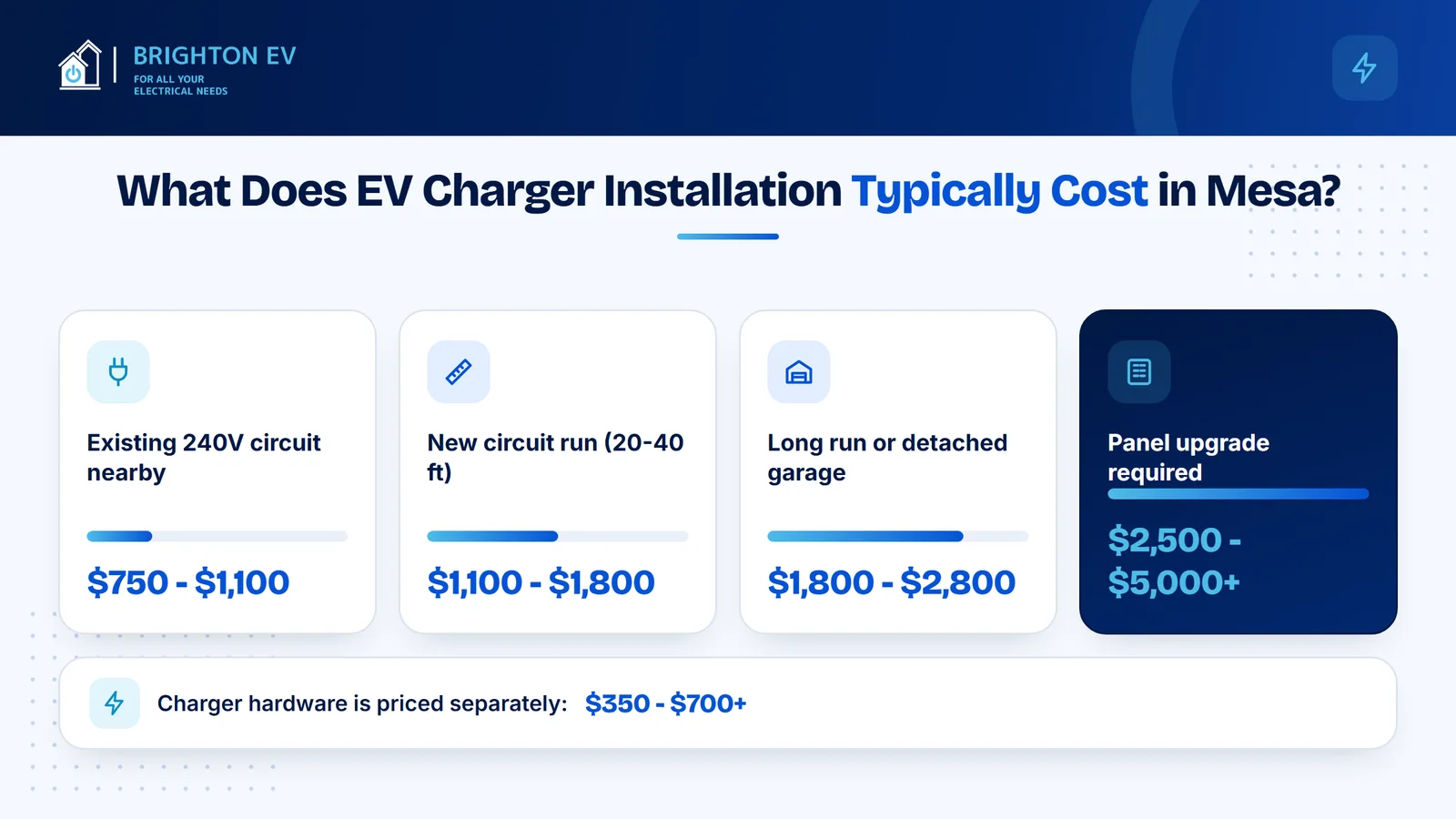
These figures reflect labor and installation materials only. The charger hardware itself, the physical unit mounted on the wall, is typically priced separately and ranges from $350 for a basic Level 2 unit to $700 or more for smart chargers with Wi-Fi connectivity and scheduling features.
This comparison shows how installation cost generally scales with how much electrical work is required beyond mounting the charger itself.
| Scenario | Typical Cost Range |
|---|---|
| Existing 240V circuit nearby | $750 – $1,100 |
| New circuit run (20-40 ft) | $1,100 – $1,800 |
| Long run or detached garage | $1,800 – $2,800 |
| Panel upgrade required | $2,500 – $5,000+ |
The takeaway is that the distance between your electrical panel and the charger location, plus whether your panel has spare capacity, does more to determine price than the charger brand you choose.
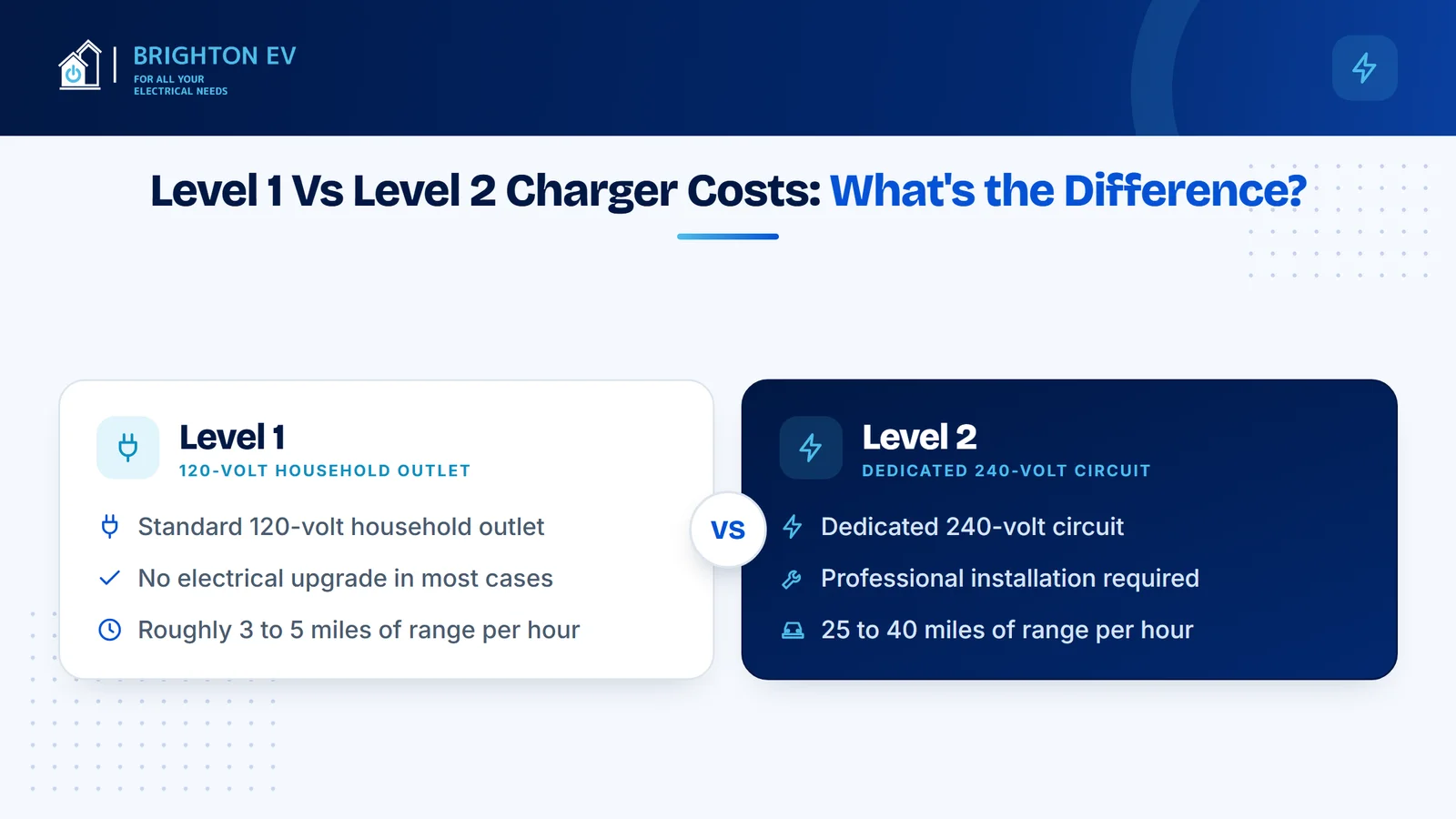
Level 1 charging uses a standard 120-volt household outlet and requires no electrical upgrade in most cases. Level 2 charging requires a dedicated 240-volt circuit and professional installation, which is where most of the cost in this guide applies. Level 1 charging adds roughly 3 to 5 miles of range per hour, which is too slow for most daily drivers, so the large majority of homeowners choose Level 2 for practical overnight charging.
A Level 2 charger delivers 25 to 40 miles of range per hour depending on the vehicle and circuit amperage, which is enough to fully recharge most EV batteries overnight. Because Level 1 charging is so slow, manufacturer guidelines for most electric vehicles recommend Level 2 charging for anyone who drives more than a short commute, which is why it’s the standard installation request.
A bare 240-volt outlet (often called a NEMA 14-50) is not the same as a full hardwired Level 2 charger installation, though both require similar electrical work. Some homeowners opt for the outlet alone and plug in a portable Level 2 charger, which can be slightly cheaper than hardwiring a dedicated wall unit, but it still requires the same permitted circuit work from a licensed electrician.
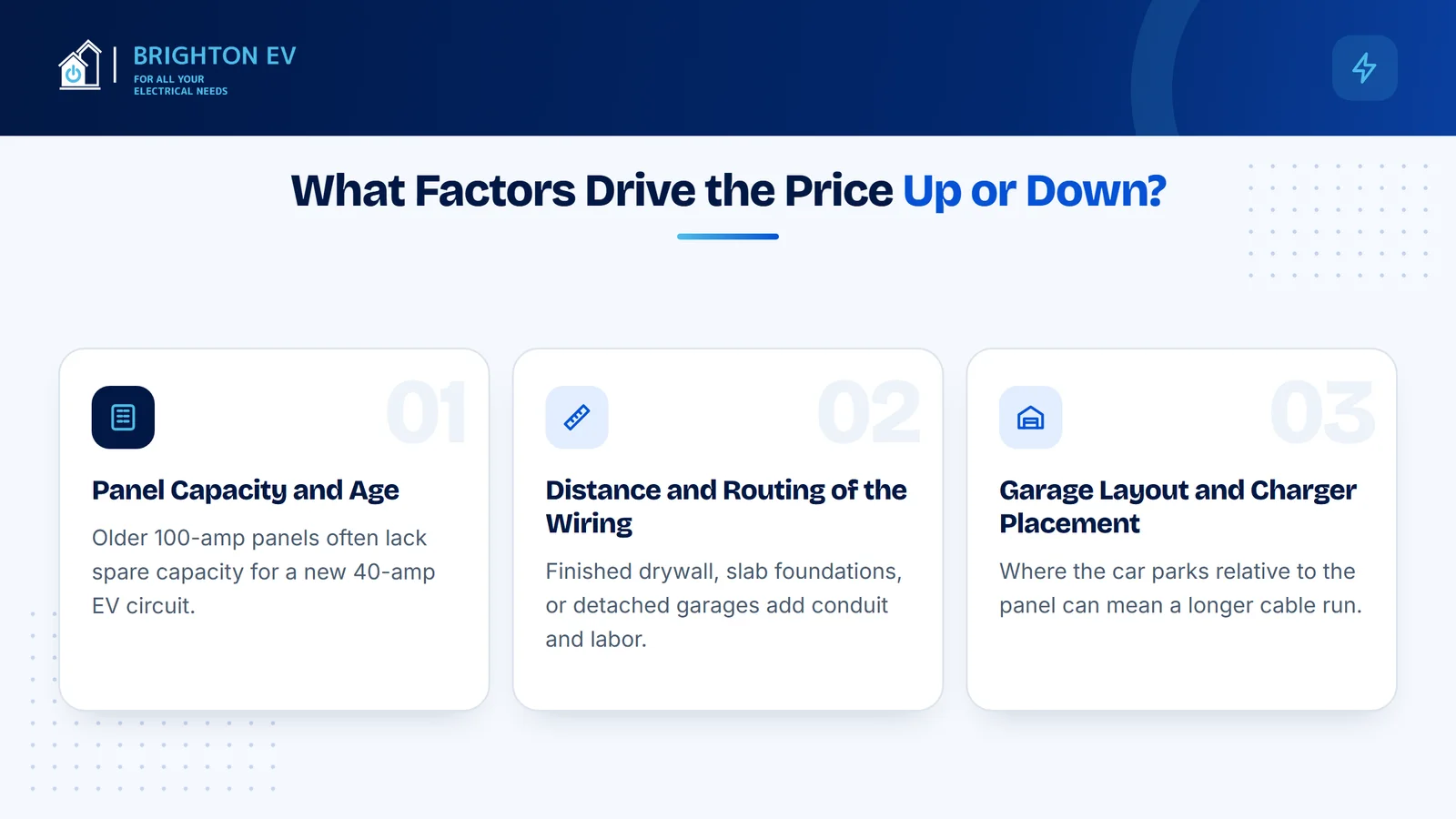
The biggest cost drivers are panel capacity, distance from the panel to the charger location, and the physical path the wiring has to take through walls, attics, or concrete. Homes with modern 200-amp panels and an attached garage near the panel are the cheapest to wire, while older homes or detached structures push costs toward the higher end of the range.
A typical Level 2 home charger draws 30 to 50 amps, more than most other single appliances in the house, so older 100-amp panels often have little room left for it without an upgrade.
Homes built before the 1990s commonly have 100-amp electrical panels, which were sized for a different era of appliance use and often lack the spare capacity for a new 40-amp EV circuit. In neighborhoods around Scottsdale, AZ, with a larger share of older custom homes, it’s common to find panels that need an electrical panel upgrade before a charger circuit can be added safely. That’s one of the main reasons quotes in that area sometimes run higher than a newer-build home elsewhere in the region.
A charger location close to the main panel, ideally in the same garage wall, keeps labor time and wire costs low. Runs through finished drywall, across a slab foundation, or out to a detached garage require additional conduit, trenching, or drywall repair, each of which adds both material and labor hours to the job.
Where the car actually parks relative to the panel matters as much as the panel’s capacity itself. Many homes in Scottsdale, AZ have side-entry garages or extended driveways set back from the street, which can mean a longer cable run than a typical front-facing garage, adding to labor time even when the panel itself has plenty of capacity.
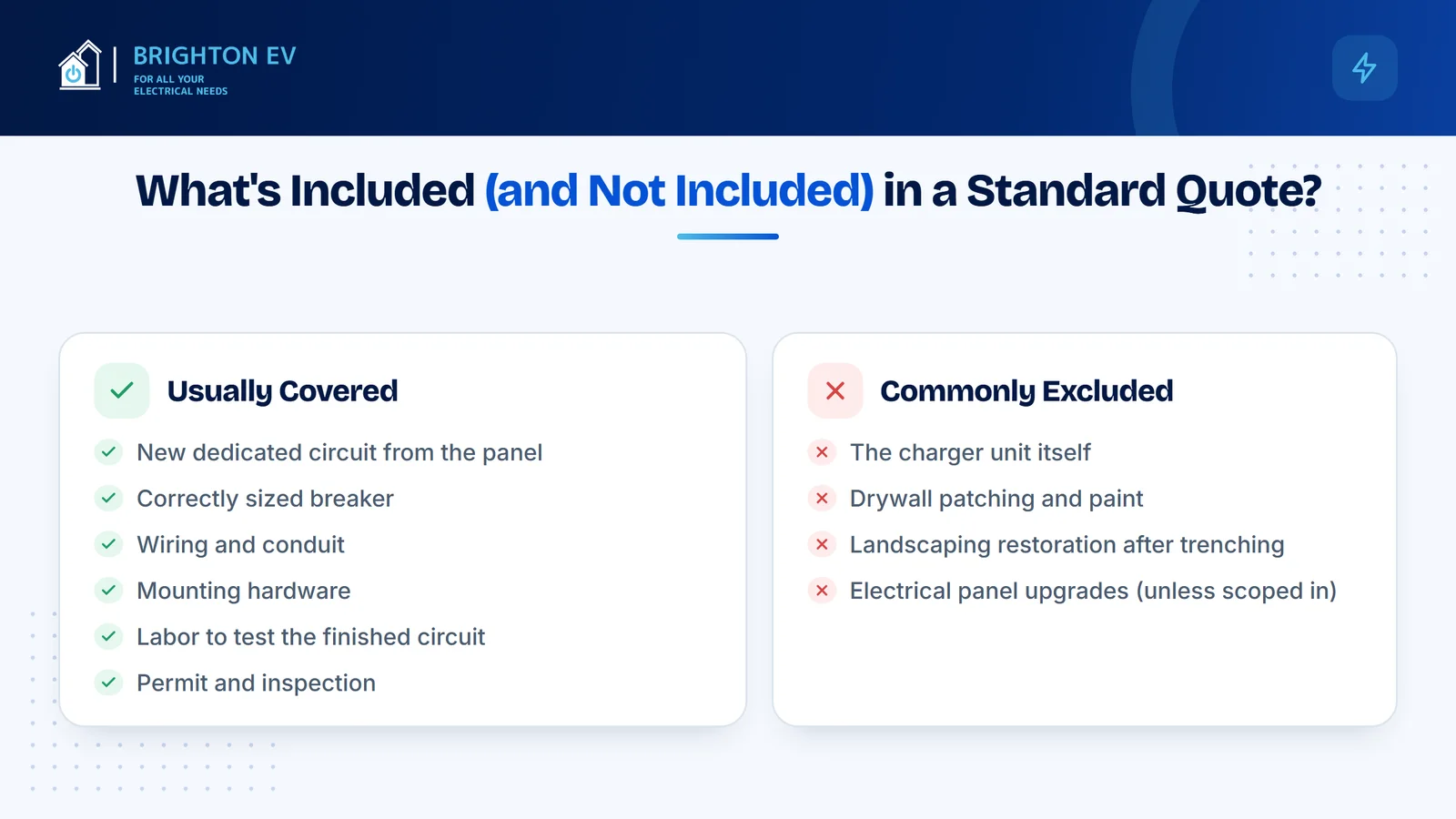
A standard EV charger installation quote should include labor for running the circuit, the breaker, wiring, conduit if needed, mounting the charger, and the permit and inspection fee. It typically does not include the charger unit itself, drywall patching and paint after wiring runs through finished walls, or electrical panel upgrades unless those are explicitly scoped in.
A complete quote should cover the new dedicated circuit from the panel, the correctly sized breaker, wiring and conduit appropriate to your home’s construction, mounting hardware, and the labor to test the finished circuit. Reputable electricians also build in the cost of pulling the required permit and scheduling the inspection as part of the project.
The charger hardware is almost always a separate line item, since homeowners frequently have a preferred brand or model in mind. Cosmetic repairs like drywall patching, repainting, or landscaping restoration after a trench for a detached garage run are also commonly excluded unless specifically requested in writing.
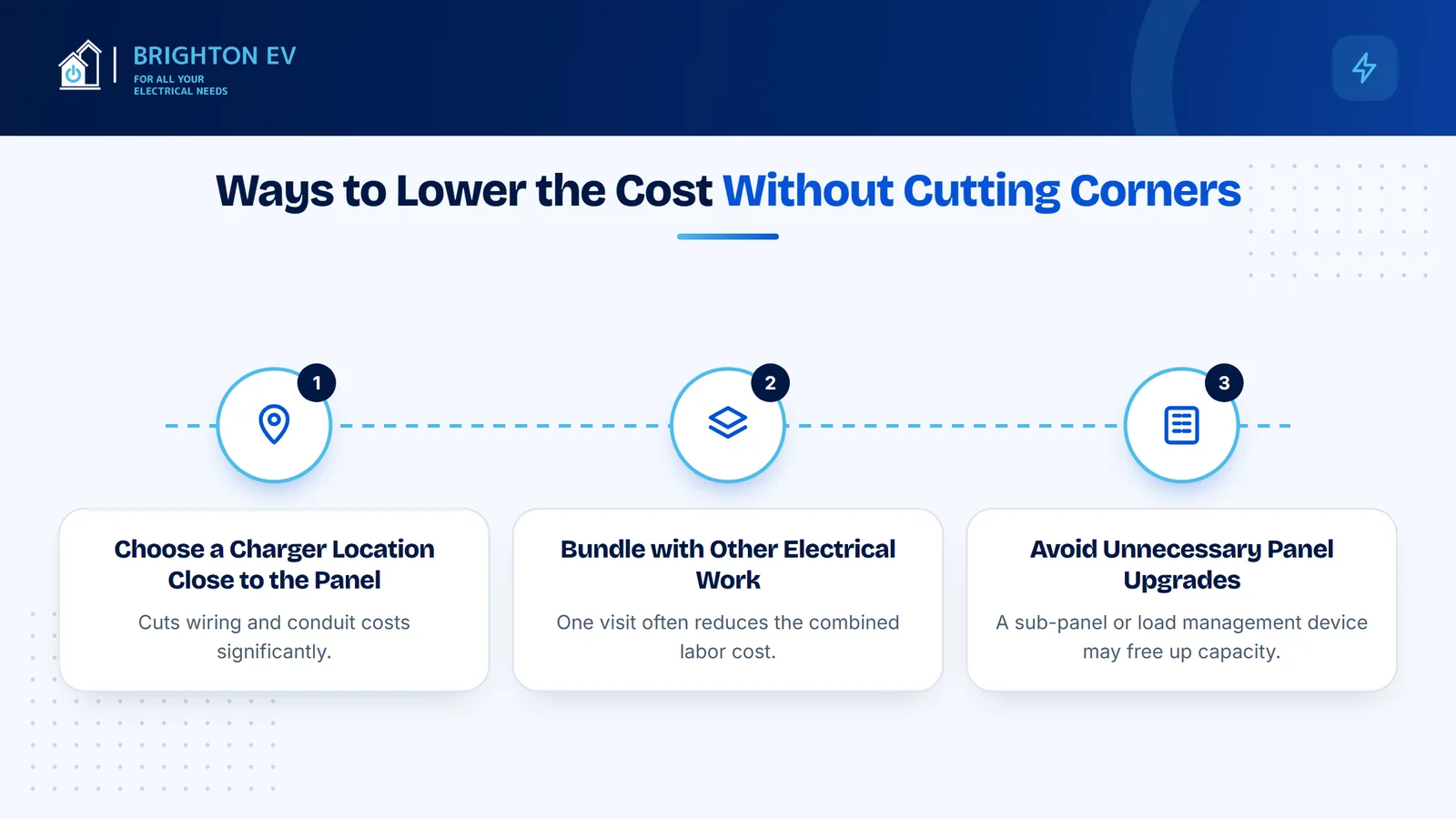
The most effective ways to reduce cost involve planning ahead rather than choosing cheaper materials or skipping steps that affect safety. A licensed electrician can usually suggest at least one or two of these options during an initial site visit.
Placing the charger on the garage wall nearest the electrical panel, rather than across the garage or on an exterior wall, can cut wiring and conduit costs significantly. If you’re building a plan before finishing a garage remodel, discussing panel-adjacent placement with your electrician early can avoid an expensive reroute later.
If your home already needs attention elsewhere, such as surge protection & safety upgrades or a panel inspection, bundling that work into the same visit often reduces the combined labor cost compared to scheduling two separate service calls.
Not every older panel needs a full replacement. In some cases, a licensed electrician can free up capacity through a dedicated sub-panel or load management device instead of a full panel upgrade, which can be considerably cheaper when the rest of the panel is in good condition.
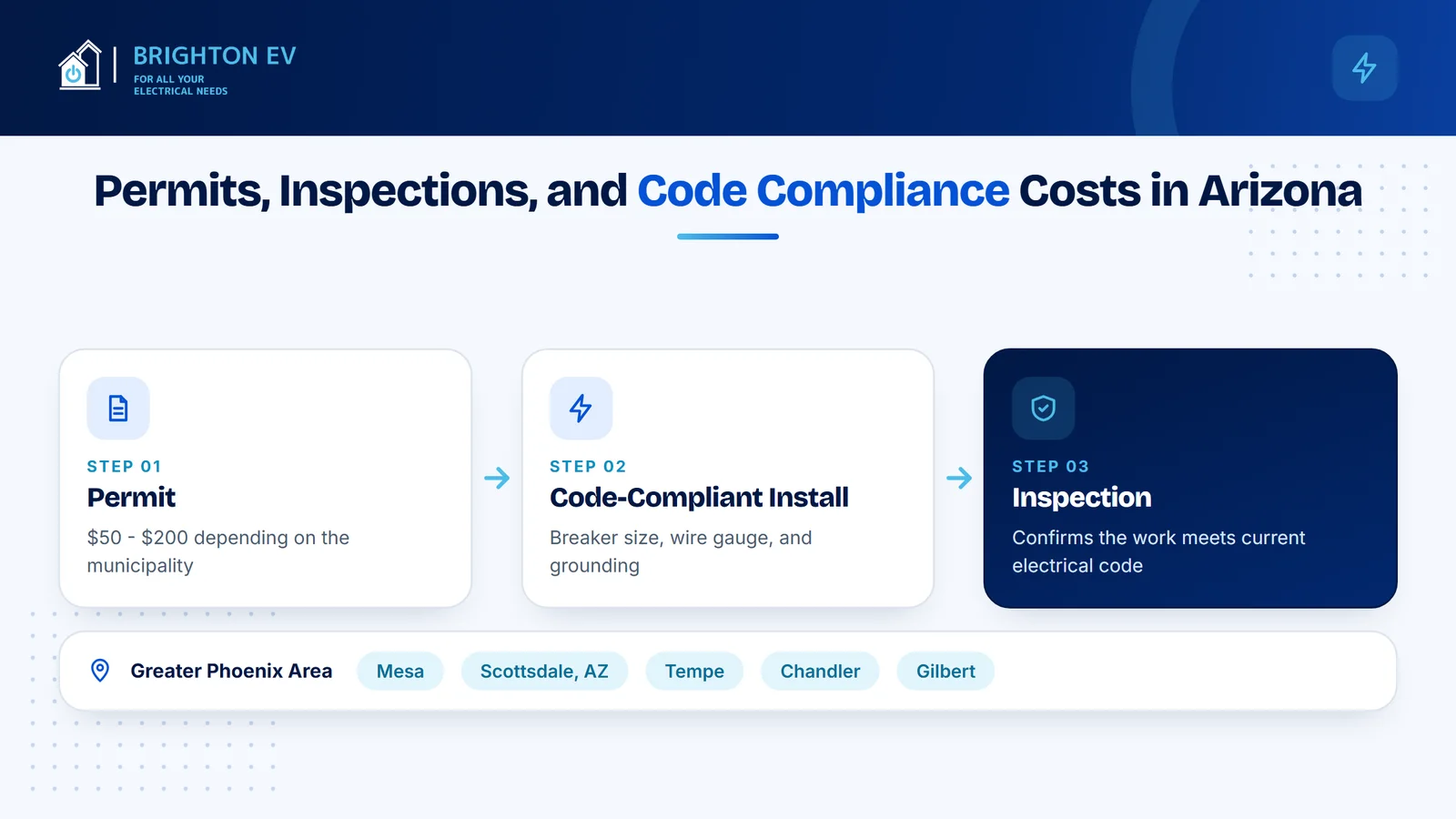
Cities throughout the Greater Phoenix Area, including Mesa, generally require a permit for new 240-volt circuits and EV charger installations, and skipping this step can create problems when selling the home or filing an insurance claim later. Permit fees are usually a modest part of the total project cost, often in the range of $50 to $200 depending on the municipality, but the inspection itself is what confirms the work meets current electrical code.
A permitted and inspected installation verifies that the breaker size, wire gauge, and grounding all meet the requirements set out in the National Electrical Code, the baseline standard most local building departments reference for residential wiring. Skipping this step to save money is one of the more common mistakes homeowners make, since unpermitted electrical work can complicate a home sale or an insurance claim after an electrical fire or damage claim.
Permit requirements and inspection timelines can vary slightly between cities in the region, from Mesa to Scottsdale, AZ, Tempe, Chandler, and Gilbert, so it’s worth confirming the process with an electrician familiar with the specific city’s building department before work begins. A code compliance inspection is also a useful step if you’re buying a home with an existing EV charger and want to confirm it was installed to current standards.
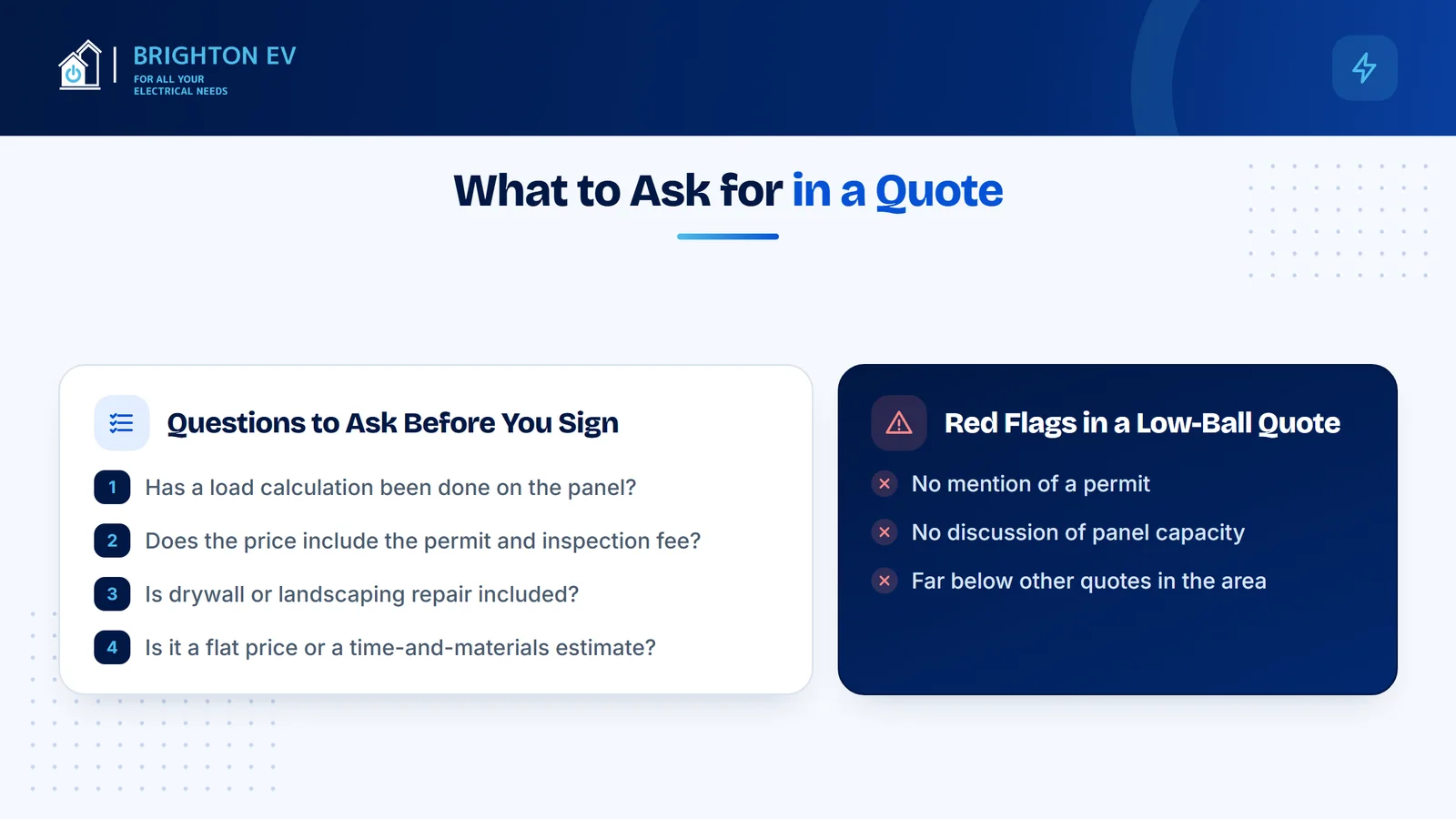
A trustworthy quote should be itemized, written, and specific enough that you could compare it line by line against a competing bid. Vague, single-number quotes with no breakdown make it hard to know whether panel work, permits, or hardware are included.
Ask whether the quoted price assumes your panel has available capacity. If it doesn’t, many homeowners discover the panel upgrade cost only after work has already started, which is avoidable with an upfront load calculation.
Before approving any quote, ask the electrician to confirm whether a load calculation has been done on your existing panel, whether the price includes the permit and inspection fee, and whether drywall or landscaping repair is included if the run isn’t fully accessible. Also ask whether the quote is a flat price or a time-and-materials estimate, since an open-ended estimate can end up costing more than expected if unexpected wiring issues are found once the walls are opened up.
A quote that comes in far below others in the area is worth a second look, especially if it doesn’t mention a permit at all or skips any discussion of your panel’s existing capacity. Residential electrical services that don’t account for code requirements upfront often lead to change orders or failed inspections later, which end up costing more than paying a fair price from the start.
Brighton EV provides licensed electrical services across the Greater Phoenix Area, including panel work, code-focused inspections, and home charging solutions for EV and Tesla owners alike. Whether you’re planning a new installation or want a professional opinion on your home’s current electrical capacity, get a clear, itemized assessment before committing to a project. Reach out to our team to get started.
Most straightforward Level 2 charger installations take 2 to 4 hours of on-site labor. Jobs requiring a panel upgrade or a long wiring run to a detached garage can take a full day or need to be scheduled across two visits if a panel upgrade requires separate utility coordination.
Yes, a permit is generally required for any new 240-volt circuit installation, including EV chargers. The permit confirms the wiring and breaker meet current electrical code and typically includes a follow-up inspection before the circuit can be used.
In many cases, yes, as long as a load calculation confirms your panel has enough spare capacity for the new circuit. If the panel is already near its limit, an electrician may recommend a sub-panel or load management device instead of a full panel upgrade.
It can, since a Level 2 charger draws 30 to 50 amps continuously while charging, more than most single appliances. A proper load calculation before installation ensures the new circuit doesn’t leave the rest of the home short on capacity during high-demand periods, like running an air conditioner and charger at the same time.
Not exactly. A 240-volt outlet lets you plug in a portable Level 2 charger, while a full installation typically means hardwiring a dedicated wall-mounted charging unit. Both require the same type of dedicated circuit, but a hardwired unit skips the outlet and connects directly to the circuit.
Wiring to a detached garage typically costs more than an attached garage install, often landing in the $1,800 to $3,500 range, because it usually requires trenching, conduit, and a longer wire run compared to a standard attached-garage installation.
Tell us what you need repaired or installed, and we’ll help plan the right electrical service.
By requesting an estimate, you agree that Brighton EV may call or text you about your request. Message & data rates may apply.